The best documentary film I’ve seen in the last two years is not one I hear much about, even though it was shortlisted for a 2025 Oscar and has a whopping 97% critic’s score on review aggregation site Rotten Tomatoes. Its audience score is only 2% lower at 95%.
It’s also won multiple Sundance awards.
The Remarkable Life of Ibelin, available on Netflix in the UK, follows a Norwegian gamer (Mats Steen) with a progressive muscular disease.
He lives a double life. There’s the outside world, where his rare condition – Duchenne muscular dystrophy, which occurs in about 1 in 3,500 male births worldwide – places increasing limits on his physical ability.
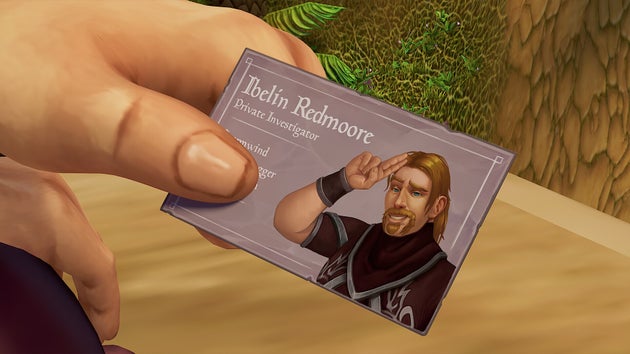
Then, there’s his online World of Warcraft persona, who’s muscularly handsome and incredibly popular.
When a tragedy occurs, his family log into the young adult’s blog, where they know he updated his followers on life with his condition.
 The Life Of Iberlin
To their amazement, this opens the doors to a life that had been invisible to them: Mats’ vast, sprawling, complex online reality, a world in which he’d spend hours every day.
After that point, the documentary delivers the most innovative and touching retrospective I’ve seen. In gamer-style pixelated reenactments, they trace the young adult’s digital journey through romances, heartbreaks (many caused by Mats), and lasting friendships.
This is made possible by a goldmine of archived World of Warcraft information, including actual conversations held between Mats and his community.
Reality is complicated. Online gatherings become in-person in meetings, which sometimes causes issues. Real life affects Mat’s online persona when his body begins to struggle to move in a manner necessary for gaming; both worlds are both.
It is to the documentary makers’ credit that they refuse to dismiss either in this often-funny, boundary-breaking, well-considered film. It’ll make you ugly-sob and snort-laugh (at least, it did me).
It’s hard to leave without being thankful we got to see the world through Mat’s eyes – both the blinking and watery kind and their digitised counterparts’.