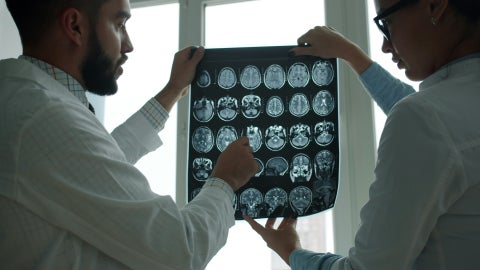
Dementia, which is believed to affect almost a million people in the UK, is an umbrella term for neurological conditions like Alzheimer’s disease.
At the moment, we don’t have an outright cure for dementia. In fact, there isn’t even a one-and-done diagnostic test yet, though researchers are optimistic about growing blood-based research.
But there’s a lot we do know, or at least suspect, too. For instance, Alzheimer’s, the UK’s most common form of dementia, has long been linked to stringy proteins called tau tangles and sticky bundles of abnormal protein fragments called amyloid plaques.
These proteins have been compared to the “trigger and bullet” in the development of the condition.
As a result, dementia researchers have previously tried to break up the problematic buildup of both tau tangles and amyloid plaques in the brain. But as it turns out, one possible method of “ungluing” amyloid plaques is based on a peptide already present in our blood.
The peptide that could stop plaques from sticking together
HAEE, which is a peptide, was “engineered” by researchers to prevent amyloid plaques from sticking together.
HAEE was designed to tackle zinc ions, which seem to act as a kind of glue for the proteins, helping them to clump together into sticky deposits.
Mouse studies have already suggested that manufactured HAEE could reduce the buildup of amyloid plaques in the creatures.
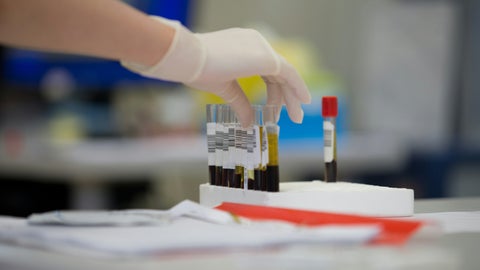
But when researchers started testing human blood ahead of possible clinical trials, they were met with a surprisingly familiar face – HAEE was already present in some people’s systems.
Not only that, but the Alzheimer’s patients’ blood had about half the HAEE levels of healthy participants’ samples.
This could have implications for future blood tests
In a PNAS Nexus paper, the researchers wrote that low levels of HAEE might be considered a “potential blood-based biomarker in the diagnosis” of Alzheimer’s.
Experts are already looking into creating blood tests that may help spot dementia years before diagnosis. If this finding proves consistent and relevant, it could be a useful new sign that someone’s at risk.
The study authors added that HAEE might even “serve as a drug in [Alzheimer’s]-modifying therapy”, though more research will be needed to bring this about.